Sustainability
Built Responsibly From the Start
Mining changes places. We accept the obligations that come with that, to the people who work for us, to the communities who host us, and to the environments we will one day hand back.
Our Approach
Responsible mining is not a department. It is a condition of operating.
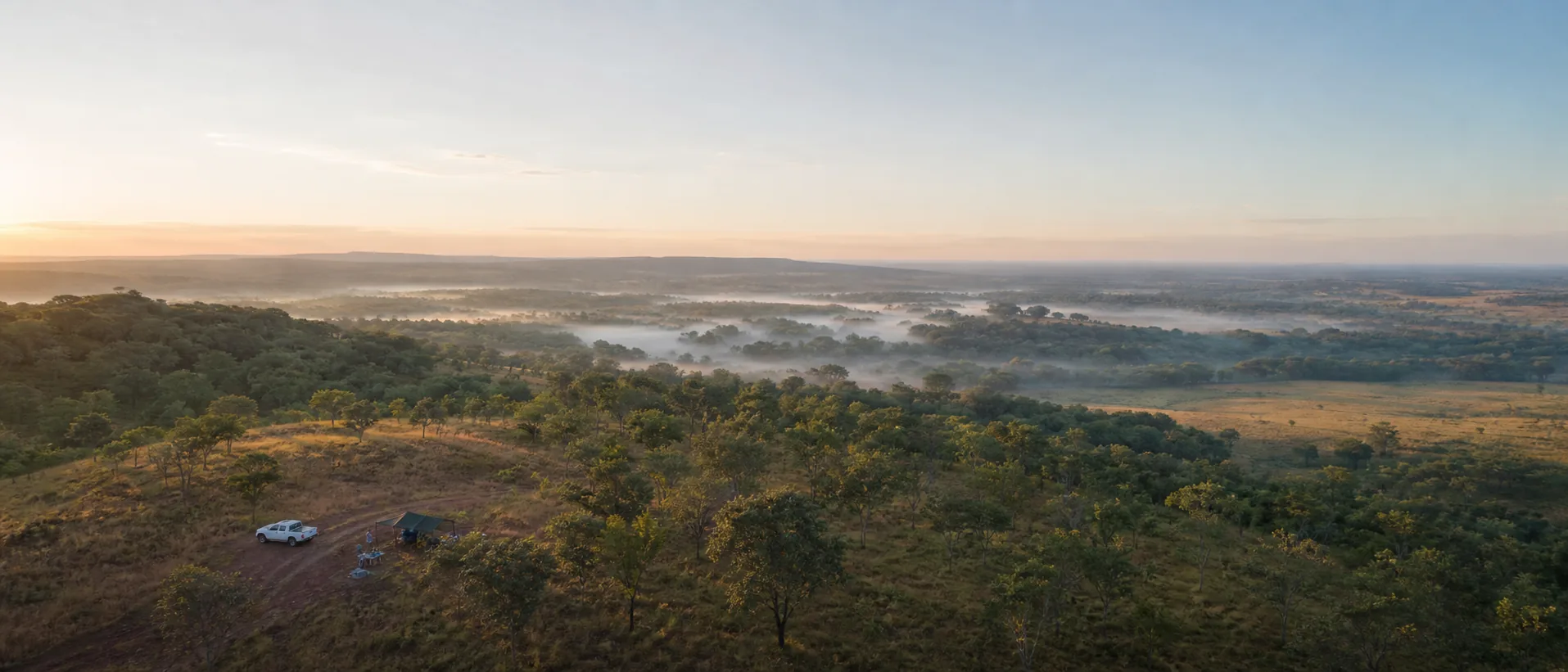 Copperbelt woodland
Why this matters to us
Mining is one of the few industries that permanently alters the landscape it operates in. It moves earth, uses water, employs thousands of people in hazardous conditions, and generates revenue in places where that revenue matters enormously. Done badly, it damages environments, displaces communities and enriches very few. Done well, it builds skills, infrastructure, tax bases and livelihoods that outlast the mine itself.
The difference between the two is not luck or geology. It is a series of decisions, most of them taken early, most of them taken before anyone outside the company is watching. Aframax is at exactly that stage. We are designing our management systems, our operating standards and our community relationships now, which means we can build them properly rather than retrofit them under pressure later.
How sustainability is governed
Responsibility for health, safety, environmental and social performance sits with line management, not with a separate function. Site leadership is accountable for performance on their site; executive management is accountable to the Board. HSES performance is a standing item at senior management level and is reviewed by the Board. Serious incidents, significant environmental events and material community grievances are escalated without delay and without filtering.
Our policies apply to every Aframax employee and are extended contractually to contractors, subcontractors and suppliers working on our sites. Outsourcing a task does not outsource responsibility for how it is done.
The Standards That Guide Us
We are building our systems to align with the international frameworks that govern responsible mining, so that our performance can be assessed against benchmarks set outside the company.
The Green Congo, Performance Dashboard
Measured, not asserted
As our operations reach scale we will measure and report our performance against dated, verifiable targets. The figures below are indicative of the commitments we are designing in.
Where We Contribute
Our activity contributes most directly to six of the United Nations Sustainable Development Goals.
Health & Safety
Our objective is absolute: no fatalities and no life-altering injuries, at any Aframax operation.
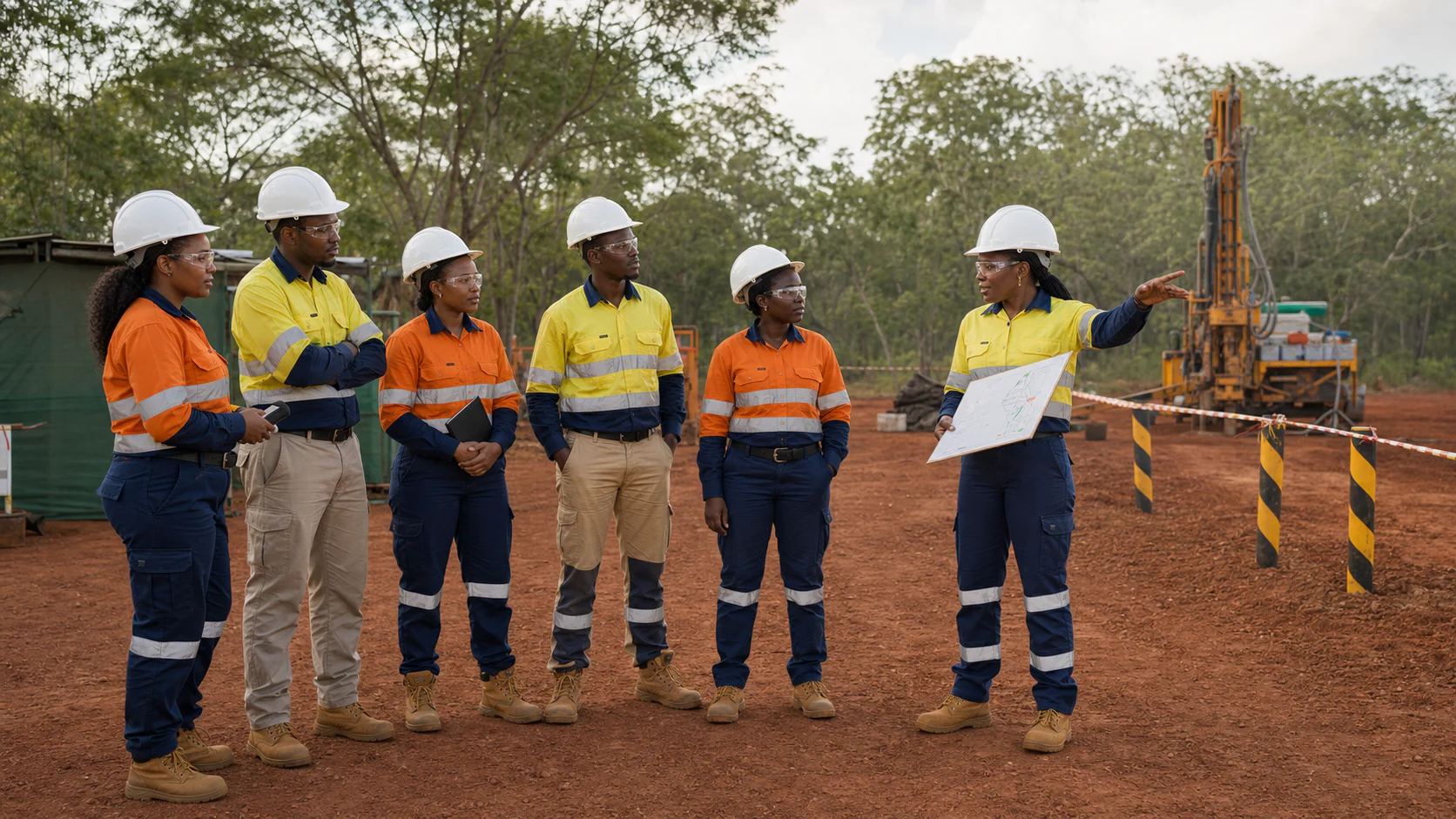 Safety briefing
Our commitment
Mining is a hazardous industry. Pretending otherwise helps no one. What we can control is whether those hazards are identified, engineered out where possible, and controlled rigorously where they cannot be. We do not treat that objective as something to be approached gradually. A serious injury is not a statistic that improves over time; it is one person whose life changed on our site.
How we manage risk
Our approach concentrates on the small number of hazards capable of killing someone rather than on lagging indicators alone.
- Critical risks, vehicle interaction, ground stability, working at height, energy isolation, confined spaces, lifting and hazardous substances, are identified for every operation, with defined controls and verification.
- Every employee and contractor has the authority to stop work they believe unsafe. Nobody is required to justify it afterwards, and nobody is penalised for it. This is stated in our contracts as well as our policies.
- Incidents and high-potential near misses are investigated for root cause, and findings are shared across all operations. We are more interested in what nearly happened than in what our injury rate says.
- Training is competence-based and verified. Nobody performs a critical task without demonstrated competence, regardless of experience claimed.
Occupational health
We monitor and manage the exposures that cause harm over years rather than seconds, dust, noise, vibration, heat stress and chemical exposure, through workplace monitoring, engineering controls and health surveillance. We also address the health risks specific to our regions: malaria, HIV and tuberculosis prevention and treatment programmes extend to our workforce and, where appropriate, to their families and surrounding communities. Mental health and fatigue are treated as safety matters.
Environment
Our operations depend on land, water and energy. Managing them well is a condition of operating at all.
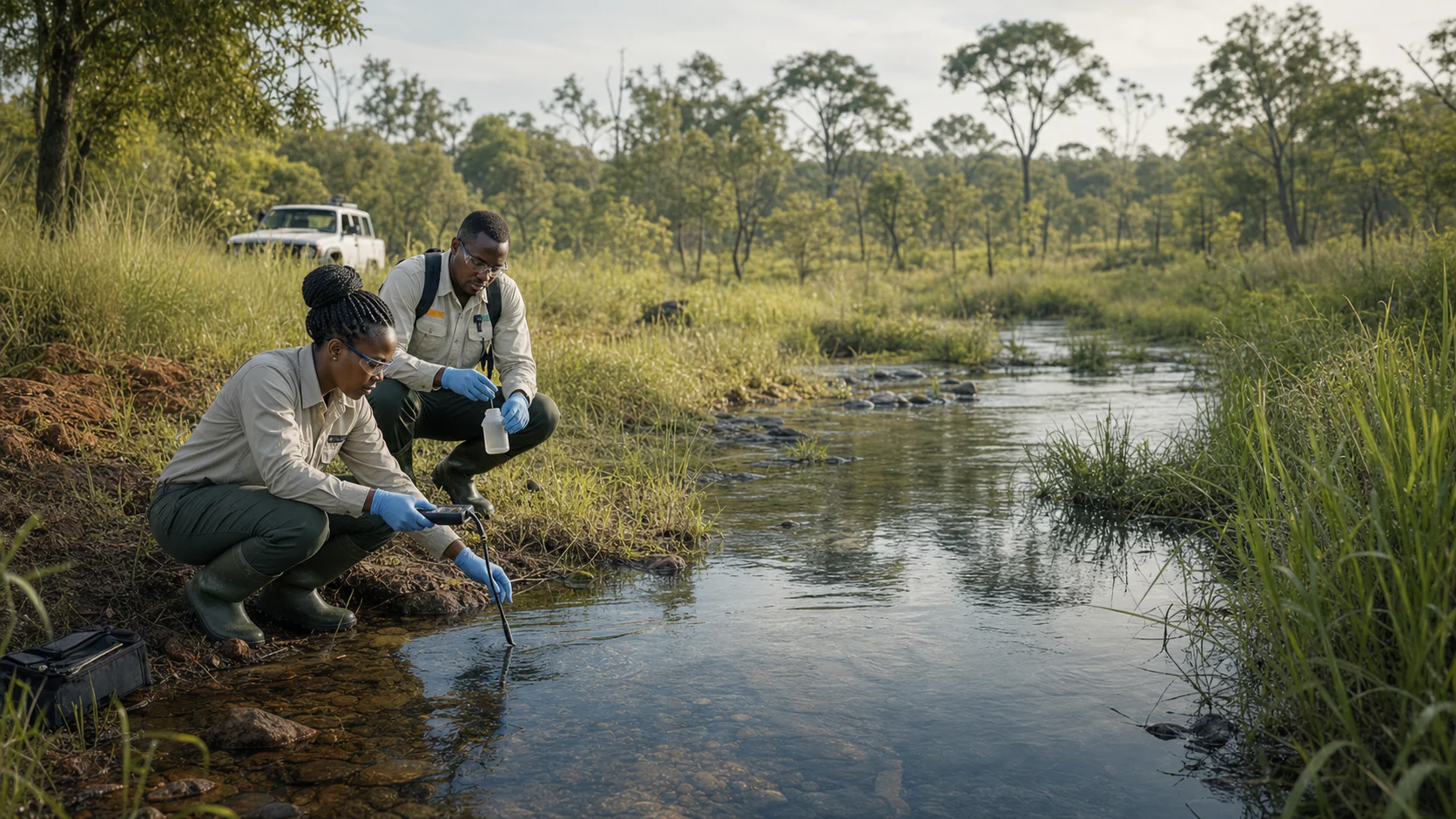 Stream water baseline survey
Environmental assessment begins before ground is disturbed. Every project is subject to environmental and social impact assessment scoped to its host jurisdiction and to the IFC Performance Standards, with management plans built into engineering design rather than appended to it.
We apply the mitigation hierarchy in order: avoid, minimise, restore, and offset only what genuinely remains. Avoidance is the cheapest and most effective control available, and it is only available early.
Water
Water is the environmental issue most likely to bring a mine into conflict with the people around it. We treat water as a shared resource rather than an input, measuring what we take and discharge, maximising recycling within our processing circuits, protecting groundwater and surface water quality, monitoring upstream and downstream, and making the results available to authorities and communities. Acid rock drainage and metal leaching are assessed at the design stage, because the cost of managing drainage rises by orders of magnitude once it has begun.
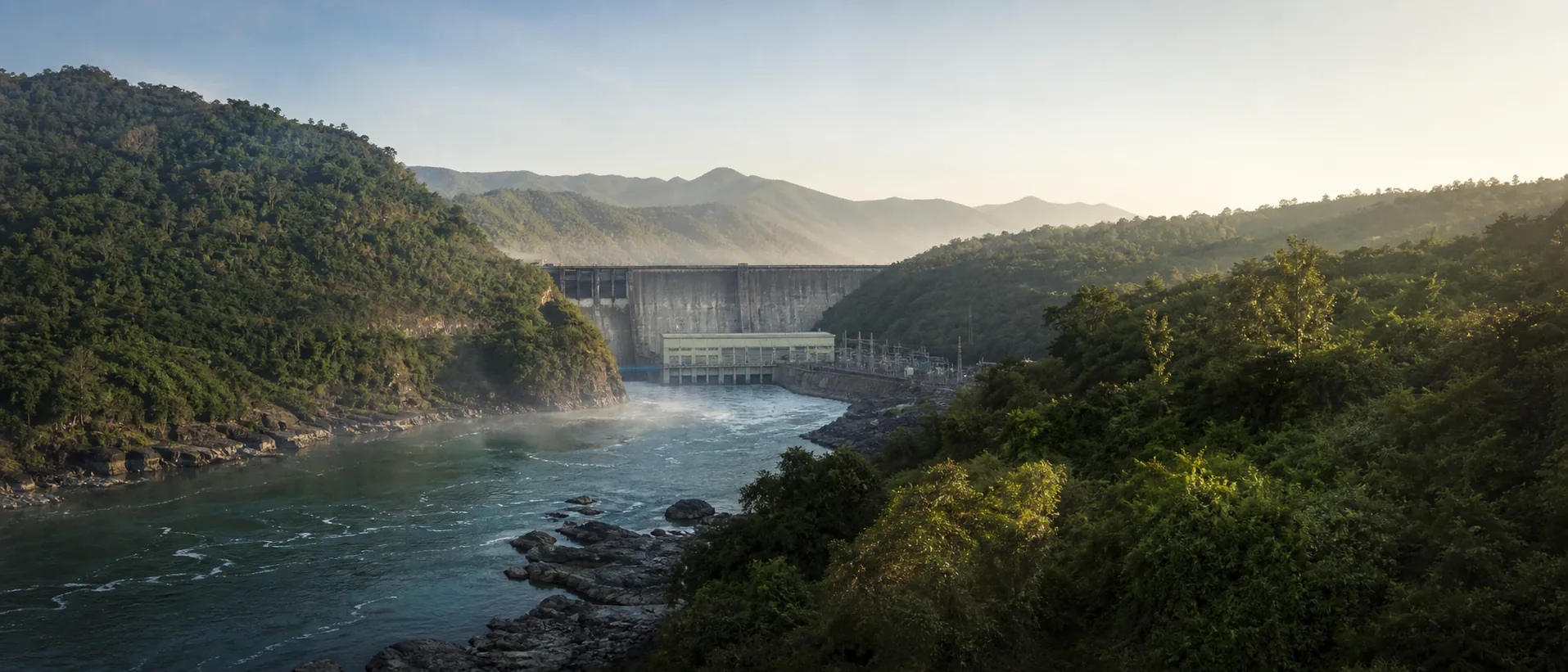 Low-carbon hydro-electricity
Energy & emissions
The metals we produce are essential to reducing global emissions. That does not exempt us from reducing our own. We work to improve energy efficiency in comminution, materials handling and processing, and to increase the share of low-carbon electricity in our supply. Our region offers a real opportunity: hydroelectric generation accounts for the large majority of installed capacity in both the DRC and Zambia. Realising that advantage depends on contracted, verifiable supply rather than grid averages, and that is what we work towards and will report.
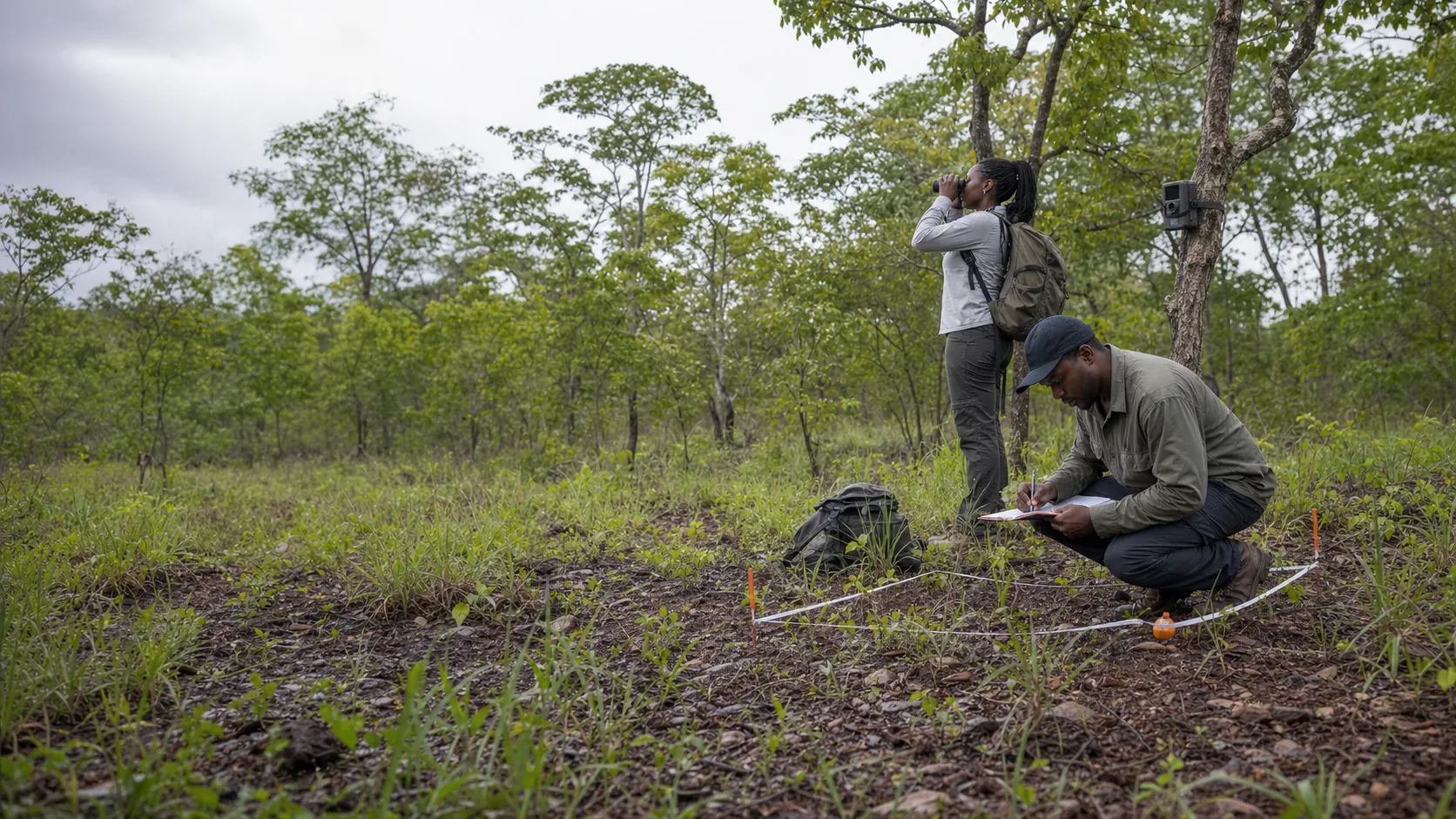 Biodiversity survey
Land, biodiversity & rehabilitation
We assess biodiversity value before disturbance, avoid critical habitat, and design footprints to be as small as the orebody allows. Rehabilitation is progressive: land is stabilised, contoured and revegetated with indigenous species as areas become available, rather than left to a single programme at closure, cheaper, more effective ecologically, and visible to communities while the mine is still operating.
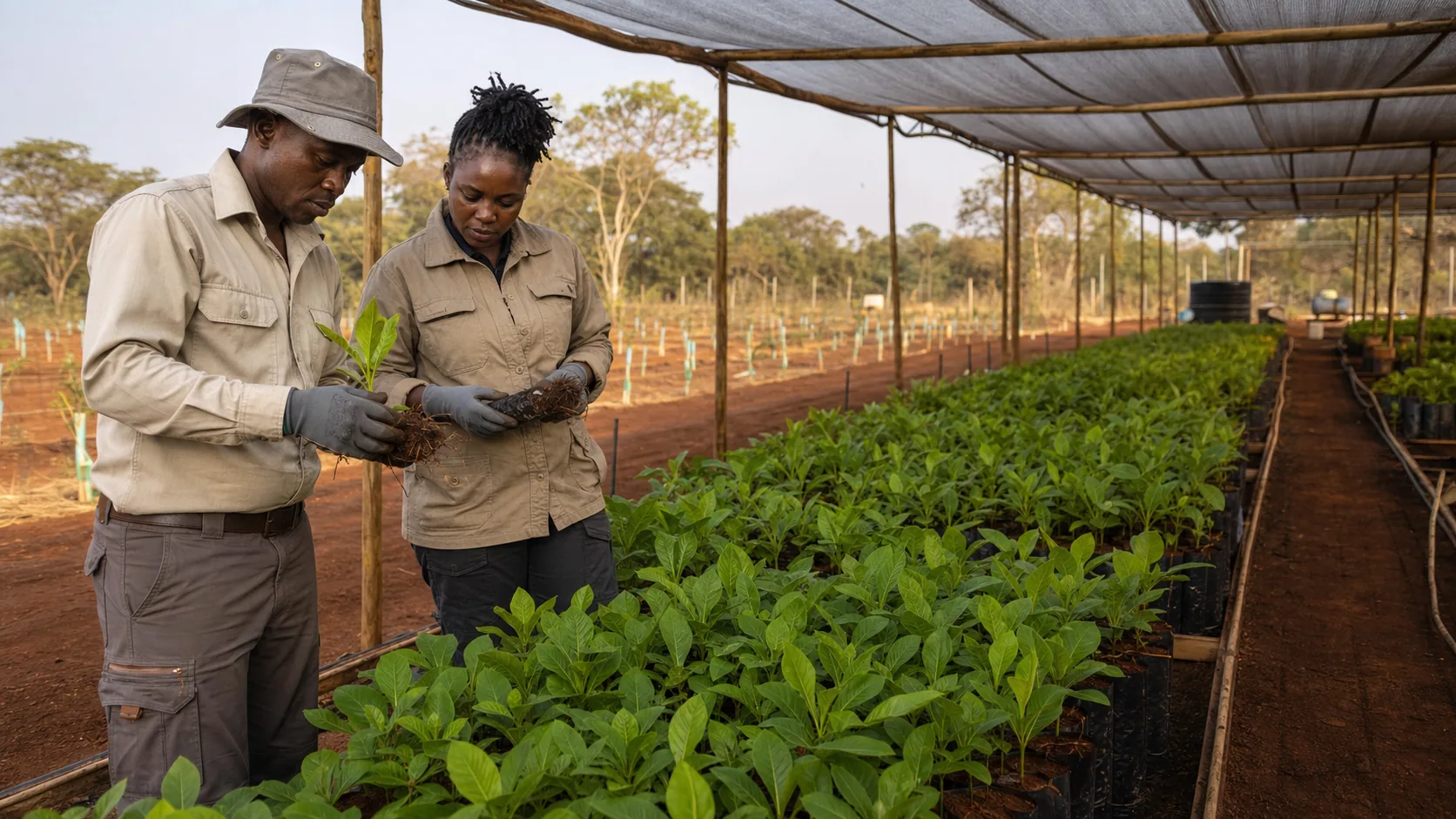 Progressive rehabilitation
Waste, tailings & closure
Waste rock and tailings storage facilities are designed, constructed and monitored by qualified engineers, with independent review and clear accountability at named individual level. Where we operate tailings facilities, we manage them in line with the Global Industry Standard on Tailings Management. Every mine closes; we plan for it from the beginning, covering physical and chemical stability, post-closure water quality, future land use and, critically, the economic transition of the workforce and communities who depend on the operation. A mine that closes leaving a stable landform but a destitute community has not been closed responsibly.
People & Communities
A mine is only as good as its relationship with the people who work in it and live around it.
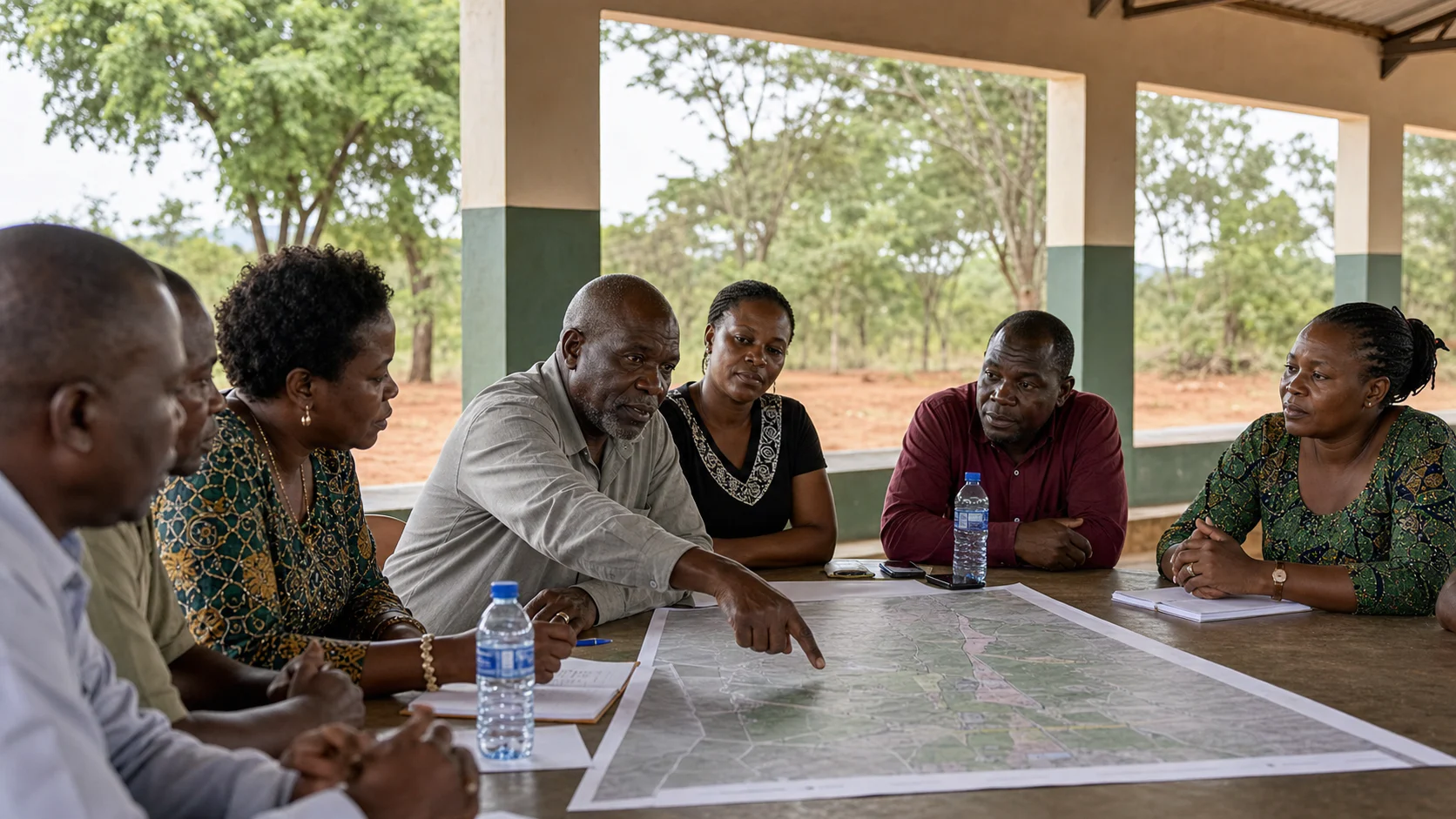 Community consultation
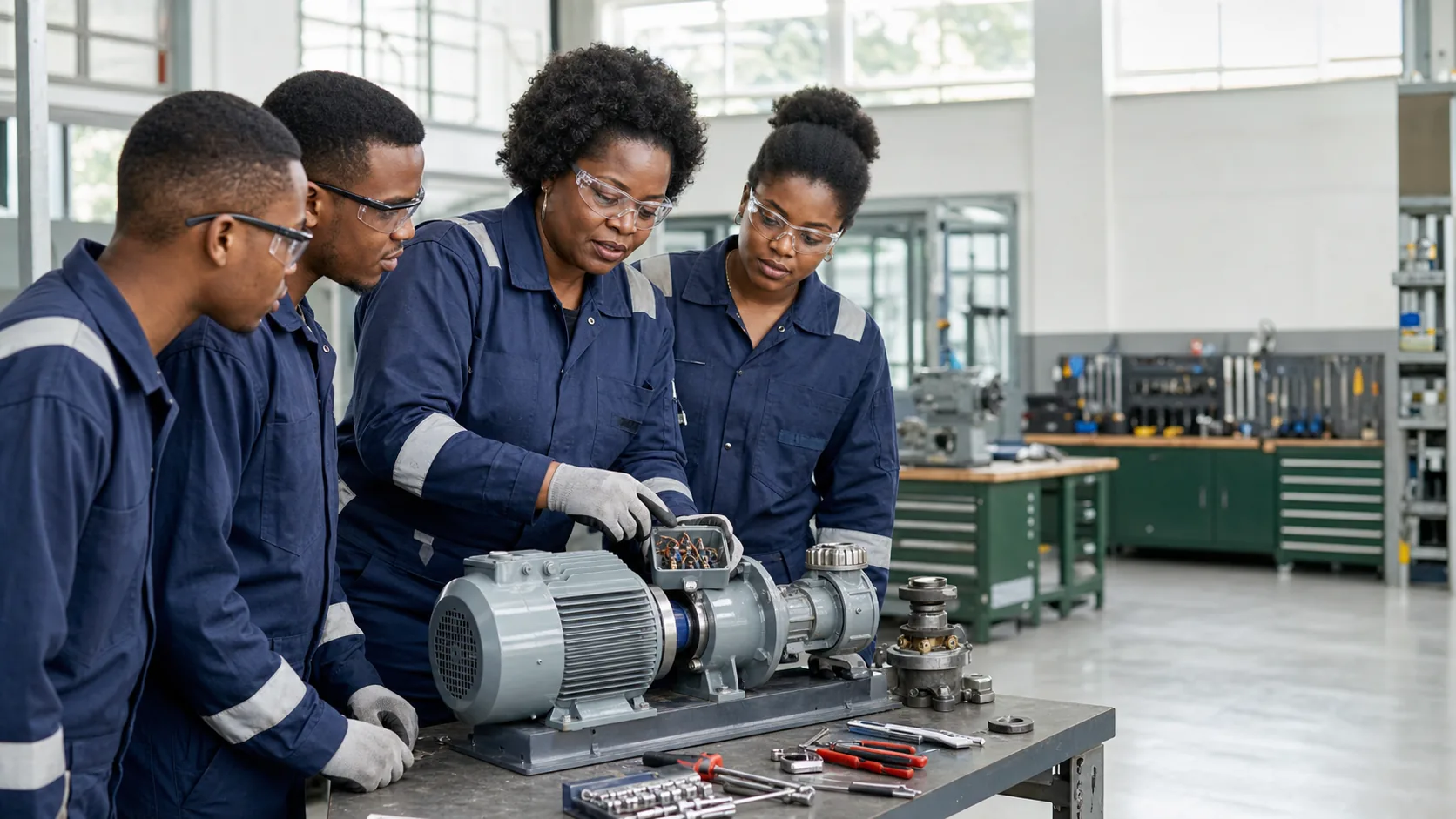 Skills & training
Our people
We employ nationals of our host countries wherever the skills exist, and we build those skills where they do not. Expatriate roles are filled to transfer capability, not to substitute for it, and each carries a clear expectation of succession by a national colleague. We invest in apprenticeships, technical training and structured career progression, because a workforce that can see a path upwards is a workforce that stays. We pay fairly and respect freedom of association and the right to collective bargaining.
Diversity & inclusion
Mining has been among the least diverse industries in the world and it has been poorer for it. We recruit and promote on merit and work actively to widen the pool from which merit can emerge, through technical training accessible to women, workplace facilities designed for a mixed workforce, and a zero-tolerance position on harassment, discrimination and gender-based violence that applies to employees and contractors without distinction.
Human rights & security
We are guided by the UN Guiding Principles on Business and Human Rights and conduct human rights due diligence appropriate to each operation. We prohibit child labour, forced labour and human trafficking, and require the same of our contractors and suppliers. Age is verified at recruitment for every hire without exception. Our security arrangements are managed in accordance with the Voluntary Principles on Security and Human Rights, private security is vetted, trained in proportionate use of force, and contractually bound to our standards. Where people enter our license areas without authorisation, we treat it as a livelihoods and community engagement question first and a security question second. Force is a failure of engagement, not a substitute for it.
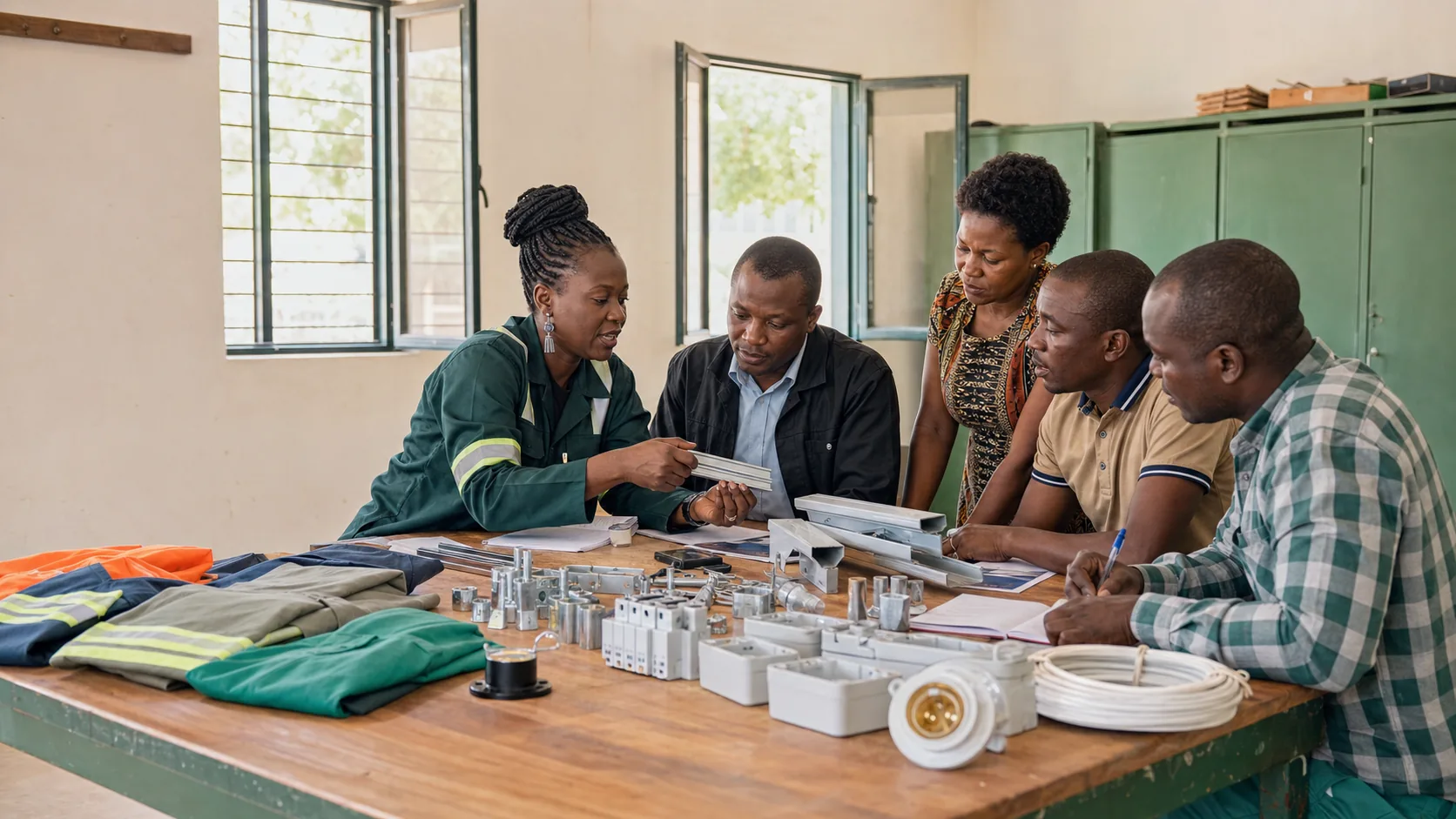 Local enterprise development
Host communities & local enterprise
Communities near our operations bear the disruption of mining most directly; they should therefore see the benefit most directly. We engage from the earliest stage of exploration, and our community programmes are developed with communities rather than designed for them. In the DRC our obligations are formalised through the cahier des charges and the mandatory community development fund; Zambia imposes no directly equivalent fund, but we apply the same standard in both countries. The largest economic contribution a mine makes is usually procurement, not wages, so we prioritise national and local suppliers wherever they can meet our requirements, and build the capability of those who cannot yet.
Raising concerns
We operate grievance mechanisms accessible to employees, contractors and community members, designed in line with the effectiveness criteria of the UN Guiding Principles. Concerns can be raised in local languages, in person or anonymously, and are acknowledged, investigated and responded to within defined timeframes. Retaliation against anyone who raises a concern in good faith is a dismissible offence. A grievance mechanism only works if people trust it; we treat a fall in reporting as a warning rather than an improvement.
Governance & Responsible Sourcing
How a company behaves when nobody is watching is the only definition of integrity that matters.
Ethics & anti-corruption
We do not pay bribes. We do not make facilitation payments. We do not permit them to be made on our behalf by agents, intermediaries, contractors or joint venture partners. This is not a statement of ambition; it is an operating constraint, and it carries a cost: there are transactions we have not completed because they could not be conducted cleanly. We accept that cost. Our Code of Conduct applies to every employee and is extended contractually to our business partners; counterparties, agents and significant suppliers are subject to due diligence including beneficial ownership, sanctions and politically exposed person screening.
Transparency
We support transparency in the extractive sector. Both the DRC and Zambia implement the Extractive Industries Transparency Initiative, and we will participate in national EITI reporting in the jurisdictions where we operate. We pay the taxes, royalties, fees and levies due in the countries where we produce, and we pay them there. Revenue generated from a country's natural resources should be taxed in that country. This is not a concession; it is part of the basis on which mining is permitted at all.
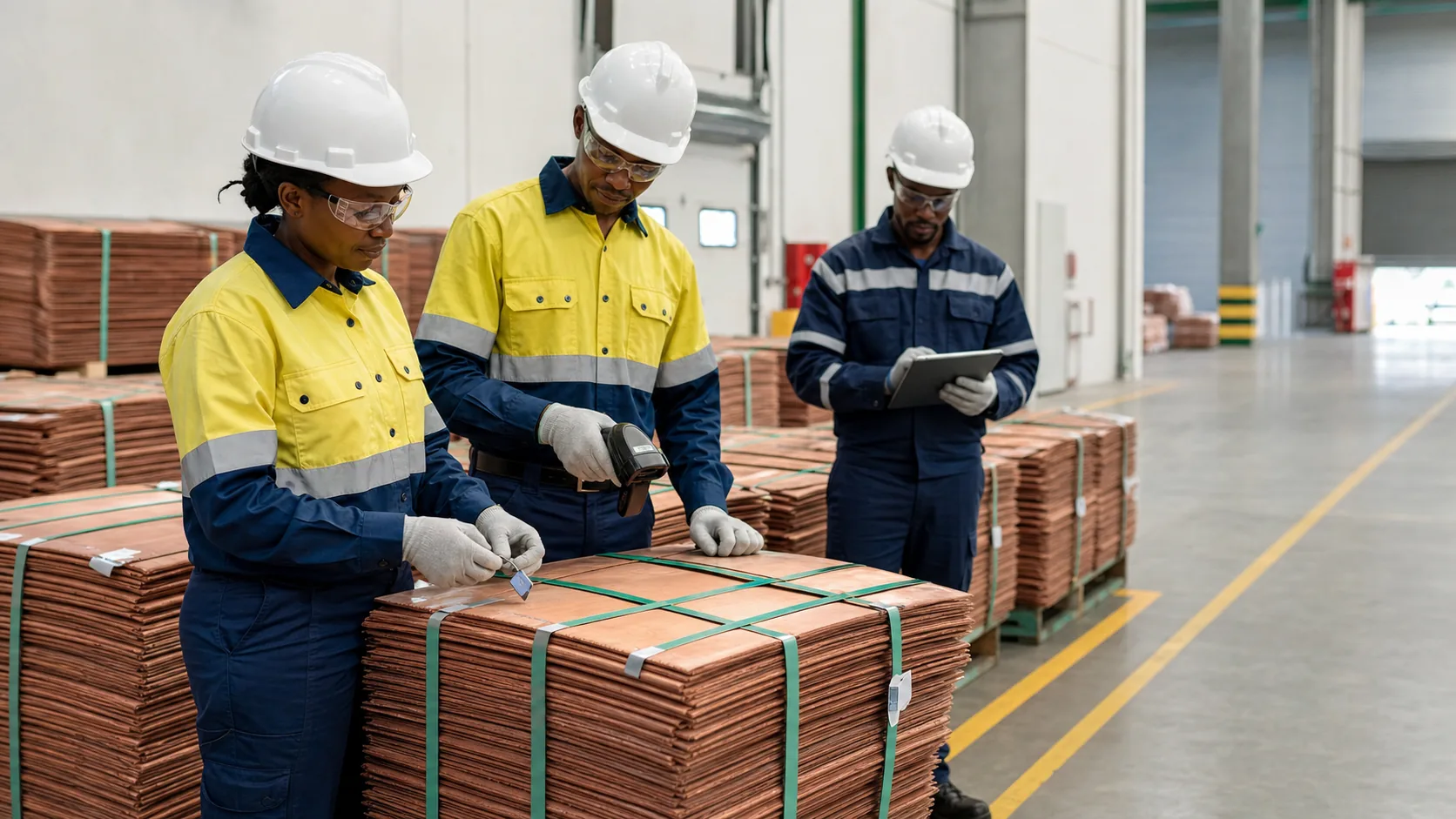 Traceability controls
Responsible sourcing & supply chain due diligence
Our supply chain due diligence follows the five-step framework of the OECD Due Diligence Guidance: a documented management system, risk identification and assessment, a strategy to respond to identified risks, independent third-party audit at appropriate points, and public reporting. In practice this means material is traceable from extraction to sale, with mass-balance controls that prevent material of unknown origin entering our production, and that we sell to refiners operating their own recognised responsible-sourcing assurance.
Our position on artisanal mining
Artisanal and small-scale mining is a defining feature of the gold sector in our region. It supports hundreds of thousands of livelihoods and is associated with serious hazards, including child labour on some sites. Our position is precise, because imprecision here is worse than silence:
- Aframax production comes from our own industrial operations. We do not purchase third-party ore at the gate and we do not buy artisanally mined material.
- We maintain physical and administrative controls against unauthorised material entering our processing chain, and we verify them.
- We employ children nowhere, in no capacity. Age is verified at recruitment, and the same requirement is imposed contractually on every contractor and subcontractor.
- Where artisanal activity occurs near our license areas, we work with authorities and communities on formalisation and alternative livelihoods rather than displacement alone.
We will not claim that the entire mineral supply chain of our region is free of abuse. It is not, and no single company can guarantee otherwise. What we can state is what we control, how we control it, and how that control is verified.
Reports & Policies
Our governance framework is set out in the following documents, published here as they are approved. A site that links to policies that actually open reads as a company with systems.
Contact
For questions about our sustainability approach, or to raise a concern about any of our operations, contact sustainability@aframaxgroup.com. Concerns may be raised anonymously through our confidential reporting channel.